M | Player Pics | Manager Pics | Managers | Players | The War Years
Personal
Fullname: James Frederick McStay
aka: Jimmy McStay, James McStay
Born: 1 April 1895
Died: 31st December 1973 at Stonehouse Hospital (Death Registered on 3rd January 1974)
Birthplace: Netherburn, Dalserf, Scotland
Signed: 13 November 1920; May 1936 (loan)
Left: 1934 (free); 28 Sep 1934 (Hamilton Academical)
Position: Left-back
Debut: Clyde 0-1 Celtic, League, 4 Nov 1922
Internationals: Scotland / Scottish League
International Caps: 0 / 3
International Goals: 0 / 0
Manager: 19 February 1940 – 23 July 1945
Succeeding: Willie Maley
Successor: Jimmy McGrory
Biog as a player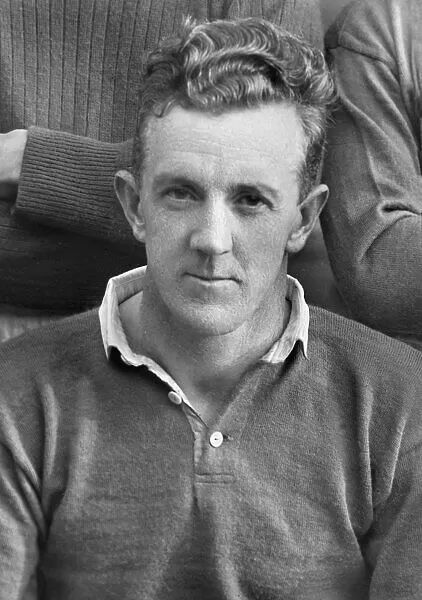
Quiet man Jimmy McStay signed for the Bhoys in November 1920 from the Royal Scots Fusiliers.
The former Larkhall Thistle man made his debut in a 1-0 league victory at Clyde in November 1922. But it took Jimmy McStay a little while to settle in at Celtic Park and his early performances as a left-half did not endear himself to the support or the directors.
Jimmy McStay’s distribution to his forwards was initially poor and he displayed a tendency to give the ball away far too cheaply. The younger brother of Hoops hero Willie McStay, Jimmy McStay’s future at the club was seriously in doubt when in February 1924 Willie Maley decided to give the player a run out as centre-half.
Maley’s instinct that Jimmy McStay would make a more than useful defender was proved right. Jimmy McStay took to his new position like a natural and before long he had gone from being on the verge of a free transfer to becoming a vital member of the team.
Jimmy McStay quickly established himself as the very heart of the Celtic defence. His no-nonsense approach to his job made Jimmy one of the most effective defenders in the game, despite never shouting or intimidating opposition players. He was not flashy but he did the simple things very well and he became a model of consistency with a string of excellent performances.
Although not overtly physical, no forward relished coming up against Jimmy McStay because they knew the Celtic man would give them little opportunity to flourish. He read the game well and time after time he would simply win the ball before clearing his lines. Imperious in the air and a great passing ability too.
A generally reserved character, Jimmy McStay liked to lead by example and his regular thwarting of some of the finest attacking talents in the game often inspired both team-mates and the support. There were few as dependable as Jimmy McStay and he seldom, if ever, let his beloved club down.
His greatest season was the 1925/26 league title winning season, which saw Jimmy McStay play in every competitive match that season. Could have been a league & Scottish Cup double but sadly Celtic lost the Scottish Cup final to St Mirren, but that doesn’t take away from the achievements of the season. Rangers were to be dominant in this decade and the next.
He succeeded his brother Willie McStay as the Celtic captain in 1929, and his assured ways helped guide the Celts to further Scottish Cup glory in 1931 and again in 1933.
In November 1931, as captain of the Scottish League, Jimmy McStay led his side to a famous 4-3 victory over their English counterparts at Celtic Park in a match where Everton’s legendary forward Dixie Deans was marked out of the contest by a brilliant performance from the Celtic man. He was though never given any caps for the full national side something that fuelled the anti-Celtic belief amongst the Celtic supporters.
One report puts his best game as the Glasgow Cup final of 1930, a 2-1 win:
“He raised the enthusiasm of the crowd to high pitch by his brilliant display“.
At Celtic, despite his quality and that of many others at the time, it was no easy time. Rangers were in the ascendency, and Celtic began to struggle. An ageing Willie Maley was increasingly becoming more distant and out of touch from the first team, and the old Celtic hegemony in the Scottish league was long gone. During Willie McStay’s time, Celtic won a clutch of Scottish Cups but only won the more coveted league title once. It didn’t reflect his quality, but it was clear that things had begun to slip at Celtic, and the club were in a rut.
The death of John Thomson and Peter Scarff had shattered many at the club but the club’s decline had begun even before these tragic events.
He may not have been the most flamboyant of characters but Jimmy McStay’s devotion and contribution to the Celtic cause was immense. He was eventually freed by the club in 1934 and went on to join Hamilton Academical. By then Jimmy McStay – the great uncle of future Celts Paul, Willie and Raymond McStay – had made 470 league & Scottish Cup appearances for the Hoops and scored 9 goals in those competitions.
A great member of a fine Celtic dynasty.
Playing Career
| APPEARANCES | LEAGUE | SCOTTISH CUP | GLASGOW CUP | GLASGOW MERCHANTS’ CHARITY CUP | TOTAL |
| 1922/23 | 24 | 6 | 0 | 2 | 32 |
| Goals | 0 | 0 | 0 | 0 | 0 |
| 1923/24 | 36 | 1 | 1 | 2 | 40 |
| Goals | 0 | 0 | 0 | 0 | 0 |
| 1924/25 | 36 | 8 | 2 | 1 | 47 |
| Goals | 2 | 0 | 0 | 0 | 2 |
| 1925/26 | 37 | 6 | 6 | 3 | 52 |
| Goals | 1 | 0 | 0 | 0 | 1 |
| 1926/27 | 26 | 5 | 0 | 1 | 32 |
| Goals | 0 | 0 | 0 | 0 | 0 |
| 1927/28 | 38 | 6 | 3 | 1 | 48 |
| Goals | 0 | 0 | 0 | 0 | 0 |
| 1928/29 | 38 | 6 | 3 | 3 | 50 |
| Goals | 0 | 2 | 0 | 1 | 3 |
| 1929/30 | 32 | 3 | 5 | 2 | 42 |
| Goals | 1 | 0 | 0 | 0 | 1 |
| 1930/31 | 37 | 7 | 2 | 1 | 47 |
| Goals | 2 | 0 | 0 | 0 | 2 |
| 1931/32 | 37 | 3 | 1 | 2 | 43 |
| Goals | 0 | 0 | 0 | 0 | 0 |
| 1932/33 | 33 | 8 | 3 | 0 | 44 |
| Goals | 0 | 0 | 0 | 0 | 0 |
| 1933/34 | 33 | 4 | 3 | 1 | 41 |
| Goals | 1 | 0 | 0 | 0 | 1 |
| Total | 407 | 63 | 29 | 19 | 518 |
| Goals | 7 | 2 | 0 | 1 | 10 |
Appearances Notes:
The Total Scottish League Appearances is now shown as 407. The previous total of 409 was based upon Jimmy McStay having played in the following 2 League matches: (1) 30/01/1926 v Motherwell (Reports confirm that it was Willie McStay who played in this match); (2) 25/03/1933 v Cowdenbeath (Reports confirm that it was Malky MacDonald who played in this match)
Researched and compiled by Celtic Graves Society & @jimmy_mccoll, thanks & appreciations to his extensive work on this.
Goals Notes:
The Total Scottish League Goals is now shown as 7 goals. The previous total of 6 goals was based upon Jimmy McStay NOT having scored in the following League match: 03/01/1925 v Airdrieonians (Reports confirm that Jimmy McStay scored in this match and not Alec Thomson).
General Notes:
Stats from the following matches are not included:
- 1927/28 – St Vincent de Paul Charity Cup
- 1928/29 – Glasgow Dental Hospital Cup
- 1931/32 – St Vicent de Paul Charity Cup
Honours at Celtic as a player
Scottish League
Scottish Cup
Glasgow Cup
- 2
Glasgow Charity Cup
- 2
Manager: 1940 – 1945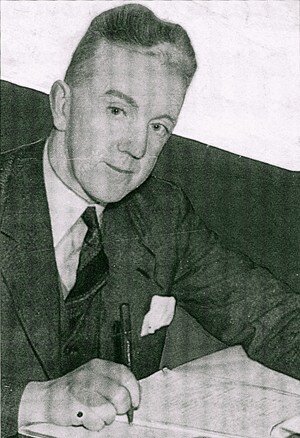
Jimmy McStay took up his appointment as manager on 19 February 1940, and was dismissed on 23 July 1945.
Willie Maley at the grand age of 72 was belatedly relieved of his post as manager after 51 years, and in his place ex-player Jimmy McStay was brought in as manager in 1940, and remained in the role throughout the war years.
On leaving Alloa to take up the post, the vice-president of Alloa said:
“He is a man in a thousand. At Alloa he has had our complete confidence right from the beginning. He picked the team himself, and was never subjected to any interference in his work from the Board”.
Sadly for Jimmy McStay, that environment was not to be replicated for him at Celtic. Willie Maley was a much more cantankerous figure so the board was less able to push their weight around with him. Jimmy McStay on the other hand was a more gentlemanly character, possibly too decent for the role, and this allowed the Board unlimited levels of interference. Maybe that’s one of the main reasons why the board hired him.
The situation meant that the war years were to be amongst the most barren in our history. Celtic had held out well during the First World War, but during the Second World War years the first team were seriously abject. Celtic’s record saw the first team finish 13th and 9th in the league in two of the seasons. It must be noted that this was in a truncated league set-up, with the league split into a separate Southern league (with Celtic, Rangers etc) and a Northern league (Aberdeen, Dundee Utd, etc). In a complete league, Celtic could have finished even lower.
The first team won only two trophies in his whole tenure, the Glasgow Cup and the Charity Cup, neither of which are major titles and were against limited opposition.
However, if Jimmy McStay wasn’t in full control then what more could he possibly have done? It was not an easy time. The war effort meant that Celtic had lost many good men (staff and players) to the war effort by choice or the call-up. Some good players even left to move to other clubs, exasperated by the club’s own management.
In the previous war, the authorities allowed the clubs to retain some players to enable them to continue to help bolster the public’s morale. Celtic took advantage and this helped to maintain the standing of the club whilst assisting those who were suffering from lost family to the war effort. This time, the board were not taking their position seriously, and allowed the club to flounder, albeit that the authorities weren’t assisting as they did previously for all in the past war.
Rangers were at their most dominant in this period (aided by various sympathetic/biased authorities and industries), and Jimmy McStay wasn’t a man able to tackle that situation with the more limited resources or support at hand.
On the other hand, Jimmy McStay was not doing a good job in either coaching or administering the team, as Celtic player Alec Boden was to later criticise:
“Even if something had gone wrong on a Saturday and a player had made an obvious mistake, McGrory would never come across and speak to the guy during the week. We never got an ounce of coaching from either [Jimmy] McStay or [Jimmy] McGrory.”
Not all was bad, and one thing that Jimmy McStay can be proud of is the finding and rearing of a few great young players despite the difficult wartime circumstances. Willie Miller, John McPhail and Bobby Evans owe a debt to Jimmy McStay.
The end was made as humiliating by the board for Jimmy McStay as much as it was throughout his whole tenure as manager. He was made to unfairly carry the whole burden of Celtic’s decline, and at the end of the war he was dismissed in preference for Jimmy McGrory. Disgracefully he found out about his dismissal through the press whilst on holiday and not directly from the board. It was perfectly illustrative of the incompetence and mismanagement by the board.
A great old stalwart like Jimmy McStay deserved better treatment. He may not have become the right man for the job, although his stint at Alloa showed he did have good managerial capabilities, but if he wasn’t fully responsible for team selection then shouldn’t those others responsible have also stepped down or be accounted for the club’s performance (i.e. the board)?
Bob Kelly, Celtic director and later chairman, later disparagingly commented on Jimmy McStay that he was in effect a “part-time manager” and that Jimmy McGrory was really ear-marked for the role. A very disrespectful and unnecessary remark from a man who should have known better.
At the end, Jimmy McStay summarised his time at Celtic as well as anyone could have: “Celtic policy was not moulded to suit my requirements. Rather my plans had to suit the Celtic requirements,” and in that last line it was clear that he was referring to the directors, a final dig at them. A surprisingly frank comment from a generally docile gentleman.
An irony is that another member of his illustrious family (Paul McStay in 1990’s) had to later work under the same level of incompetence of board management at Celtic as himself. Thankfully, in Paul McStay’s case, he came out on top against that set of board directors.
Jimmy McStay later managed Hamilton Academical between 1946 and 1951. They were relegated to the second tier in his first season, and despite missing out marginally for promotion on their first attempt, thereafter they mostly languished in the Scottish Division B.
He passed away in 1974 and is buried in Larkhall Cemetery. He will forever be fondly remembered.
Managerial Career
[Table required]
Honours at Celtic as a manager
Glasgow Cup
- 1
Glasgow Charity Cup
- 1
Links
Pictures
Notes
- A remembrance event was held by the Celtic Graves Society in memory of Jimmy McStay on 16 November 2024 (pics are in the player gallery page).